People expect hip surgery to fix things for good, so when stiffness or discomfort returns years later, it leaves them wondering what changed. For many, it begins quietly. Sitting through a meeting becomes uncomfortable. Long drives feel heavier on one side. Getting up after a couple of hours in one position takes more effort than before. These early signs often tell the surgeon that the previous implant may not be supporting the hip the way it once did.
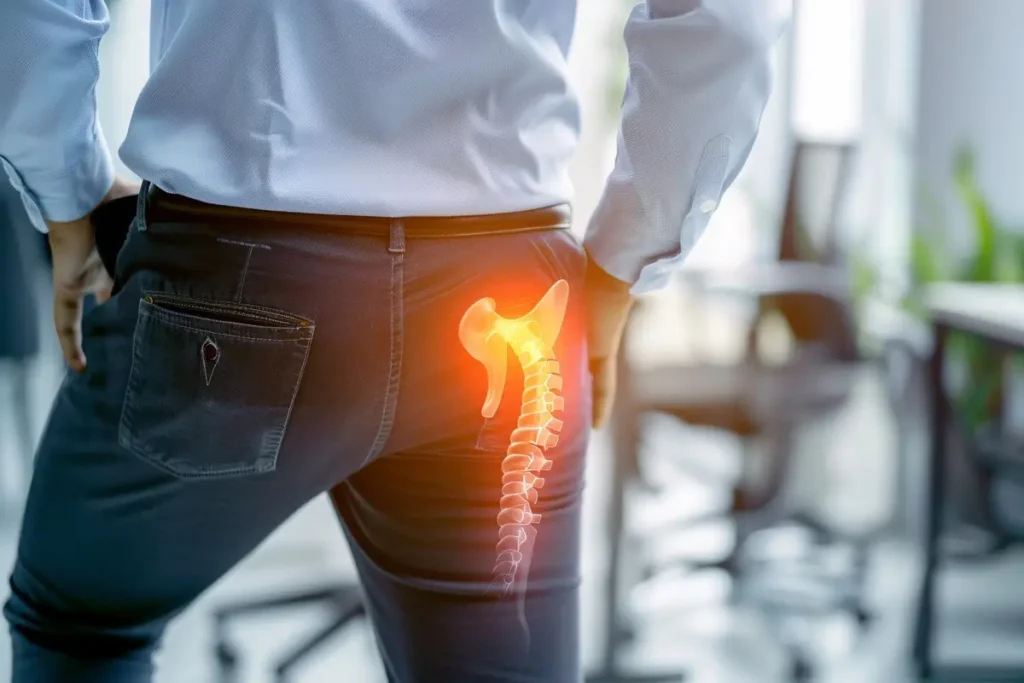
These patterns of discomfort are one of the main reasons specialists in Delhi look closely at long sitting hours when assessing revision cases. It helps them understand how the joint is settling, whether the implant is loosening, and how the surrounding bone is coping with daily load. It is also why people who notice these slow, persistent changes often turn to the best hospital for revision hip replacement surgery in Delhi, hoping for a clear explanation before things progress further.
Most hip movements happen while walking, climbing, or turning, but the hip actually endures some of its highest internal stress while sitting for long periods. If an implant has started loosening, even slightly, the pressure that builds during long, fixed postures makes the discomfort more noticeable.
Good revision surgeons watch for this pattern because it reveals how stable the implant truly is. Movement-related pain can come from many sources, but sitting pain often points directly to how the cup or stem is behaving inside the bone.
This is why a revision hip replacement surgeon spends time asking about your work habits, car travel, and how your hip feels after long stretches of staying still.
Delhi’s growing corporate workforce often sits for eight to ten hours a day. Over time, if the implant is not aligned perfectly or if the surrounding bone is becoming weaker, this routine can slowly aggravate the joint.
People usually dismiss the early stiffness as fatigue, but with revision cases, these small shifts help surgeons understand whether:
Recognising this early gives patients a far better chance of a smooth plan for recovery from revision hip replacement later.
Hospitals that specialise in revision work follow a slower, more detailed assessment process. They observe posture-related discomfort, compare weight distribution during sitting and standing, and check how the hip responds after staying in one position for too long.
This is different from evaluating a fresh injury. Revision cases need patience and careful interpretation. The goal is to understand where the old implant is failing and whether the joint can still be supported without immediate surgery.
At Sant Parmanand Hospital, this step-by-step approach helps us understand each hip individually rather than jumping into decisions too quickly.
Long sitting pain isn’t just a symptom. It shows how well the hip handles daily load without movement. If the pain builds quickly or is difficult to ease, it often means the implant is no longer absorbing force the way it should.
For patients who need revision hip replacement, this early clue helps surgeons decide the level of intervention needed and how soon it should be planned.
It helps the surgeon explain things in a straightforward way, so you know what to expect and can plan your recovery without surprises.
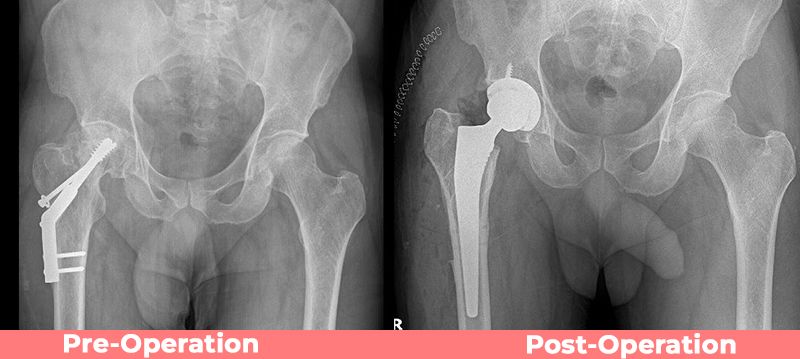
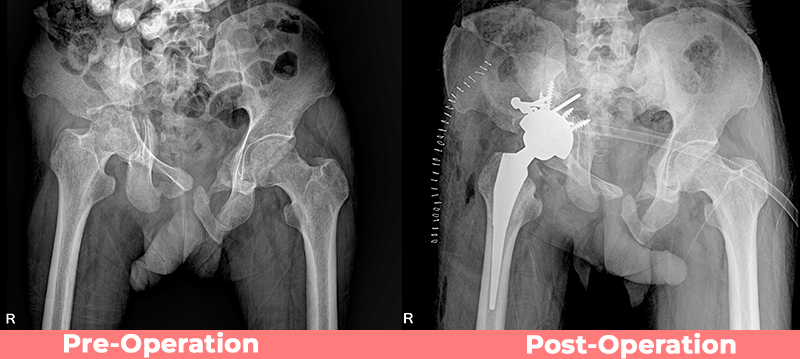
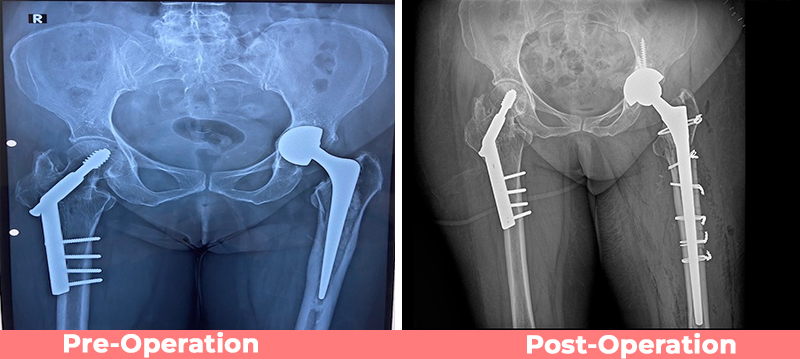
Revision surgery is not the same as the first hip replacement. It involves removing an old implant, preparing the bone again, and inserting a new component that fits securely.
A best revision hip replacement surgeon considers the bone strength, the reason for loosening, and the way the joint has been compensating over the years. Every detail matters, which is why hospitals with long experience in complex orthopedic cases tend to give steadier outcomes.
The procedure takes more planning because revision joints must last and support the patient’s lifestyle for many more years.
Many patients worry about revision hip replacement recovery time, especially those who work long office hours. The recovery is usually longer than the first surgery because the bone needs time to adjust to the new implant. But steady improvement is very common when rehab is followed properly.
Patients are taught how to sit, how often to take breaks, and how to manage load on the hip. They also learn how to avoid positions that place too much pressure on the new implant in the early weeks.
Over time, the hip settles, and the discomfort that once appeared after long sitting hours gradually eases.
Revision cases are among the most complex procedures in orthopaedics. A surgeon with experience understands the difference between normal post-surgery stiffness and a subtle sign that the hip is not coping well.
That is why people often prefer centres known as the best hospital for revision hip replacement surgery in Delhi, where surgical expertise, imaging, physiotherapy, and follow-up care all work together.
When patients come to us for revision assessment at Sant Parmanand Hospital, we look carefully at how their hip feels after long periods of sitting. That small detail often says more about the joint’s real condition than any scan alone.
A well-planned revision gives patients the chance to return to daily life with better comfort and confidence. A few small adjustments help the new joint settle:
These simple steps support the joint and make recovery feel less overwhelming.
Revision hip surgery is not just about replacing an old implant. It comes down to noticing how the hip handles everyday routines, especially those long stretches of sitting that many people can’t really avoid. When surgeons take time to study these patterns, the entire plan becomes clearer and recovery becomes far more predictable.
At Sant Parmanand Hospital, one of the best hospital for revision hip replacement surgery in Delhi, we approach every revision case with this patience. When the hip is studied carefully and the recovery journey is supported step by step, people often find that the stiffness and uncertainty that troubled them slowly give way to comfort again.
Sitting for long stretches keeps the hip in one fixed angle, which can strain the joint, tighten the surrounding muscles, and make any looseness around an implant feel more noticeable.
It’s a second surgery done when an older hip implant starts giving trouble. The worn parts are taken out and a new implant is fitted so the hip feels steady again.
When a hospital has a team that’s used to seeing these tricky cases, things usually feel more organised for the patient. Sant Parmanand Hospital is one of the centres in Delhi that deals with revision work often and has the support system it needs.
Long, fixed hours of sitting place steady pressure on the hip without much movement. Over time, that constant load can make an older implant loosen sooner than expected.