A 30-year-old male with Chronic Kidney Disease (CKD) on maintenance hemodialysis (MHD) and reactive Hepatitis C Virus (HCV) status presented with complaints of fever, cough, loss of appetite, and weight loss for 2 weeks.
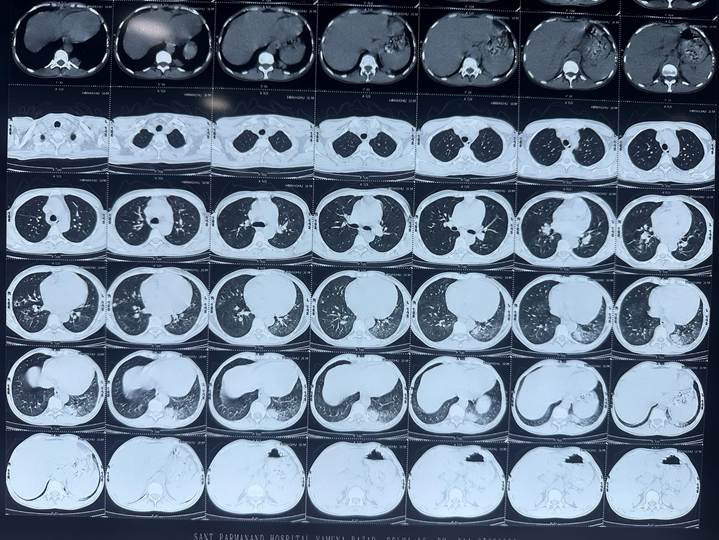
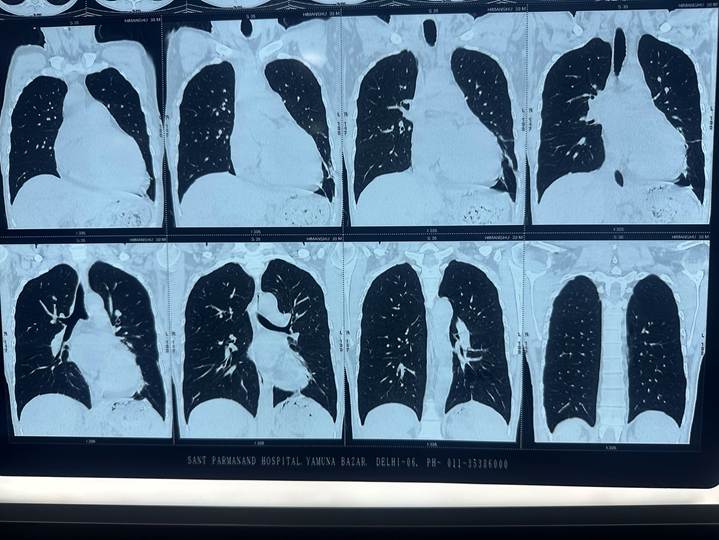
Initial CT chest revealed left lower lobe consolidation with surrounding ground-glass opacities (GGO). Given the patient’s immunocompromised status and persistent constitutional symptoms, further evaluation with bronchoscopy and BAL workup was undertaken.
The patient was subsequently diagnosed with invasive fungal disease of the lung.
The patient was initiated on targeted antifungal therapy with Posaconazole, which was continued for a duration of 3 months, along with close clinical and radiological follow-up.
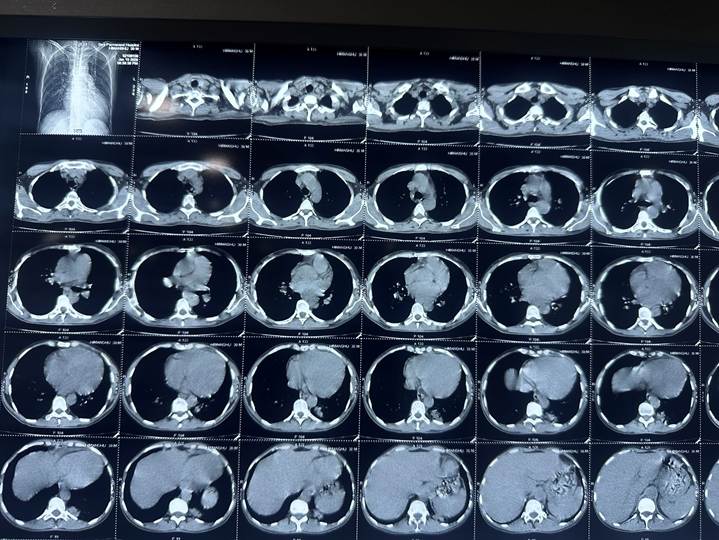
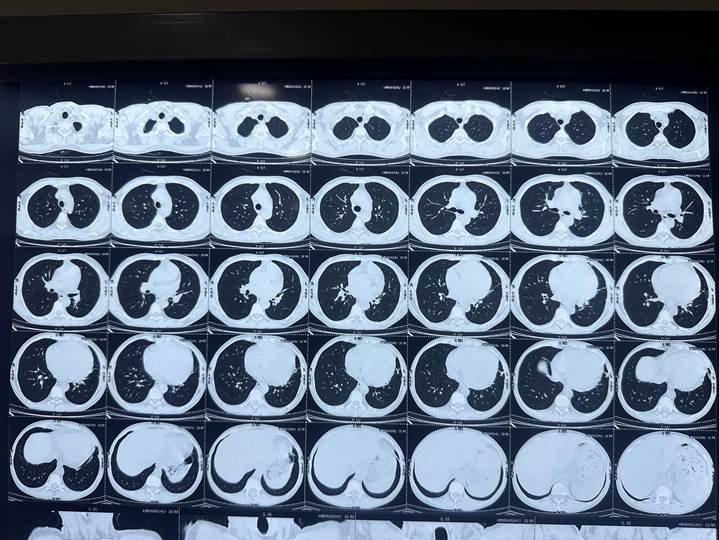
The patient demonstrated significant clinical improvement with complete resolution of symptoms. Follow-up CT chest showed complete radiological resolution of the previously noted left lower lobe lesion, with no residual consolidation or active disease.
The patient is currently asymptomatic and clinically stable.
Initial CT Chest: Left lower lobe consolidation with GGO suggestive of invasive infective pathology
Follow-up CT Chest: Complete radiological resolution after 3 months of antifungal therapy
This case highlights the importance of maintaining a high index of suspicion for invasive fungal disease in immunocompromised patients, especially those with CKD on hemodialysis presenting with non-resolving pulmonary infiltrates. Early bronchoscopy with BAL and timely institution of targeted antifungal therapy can lead to excellent clinical and radiological outcomes.