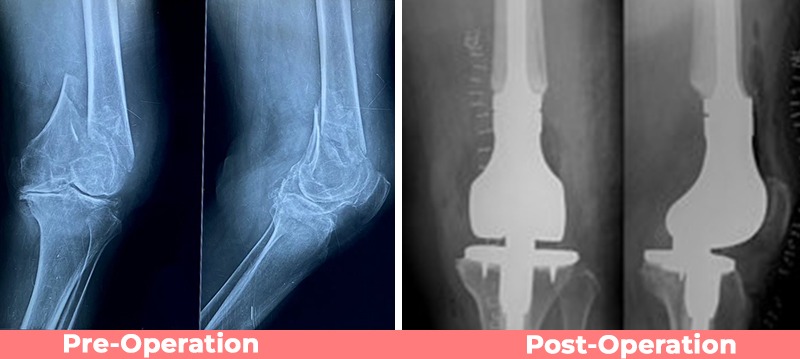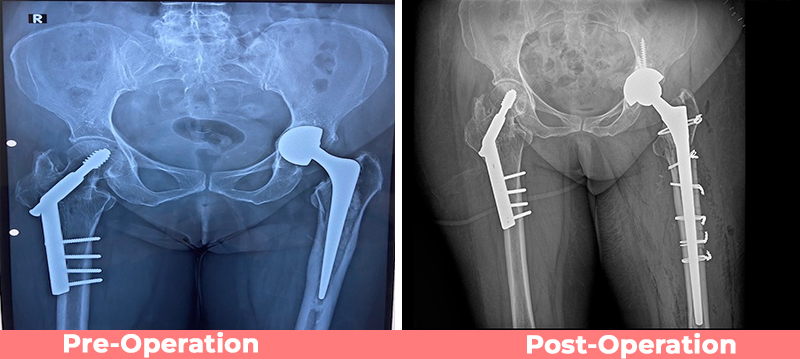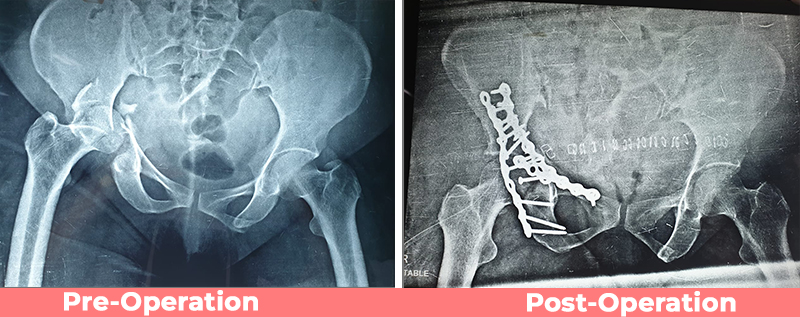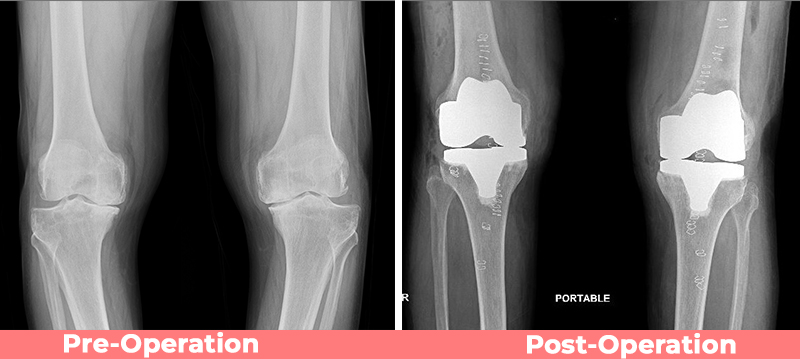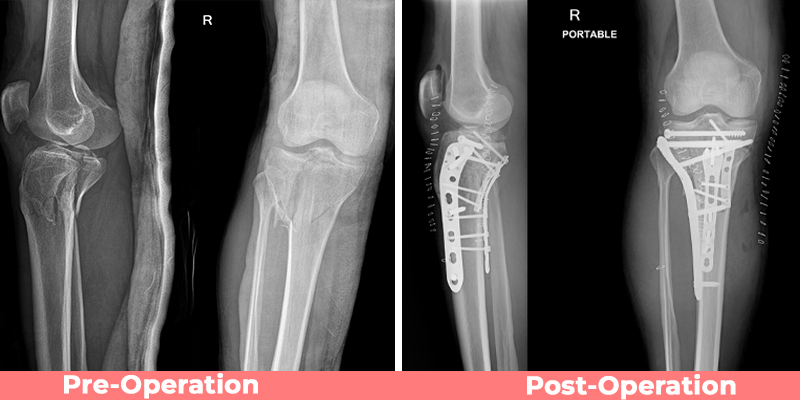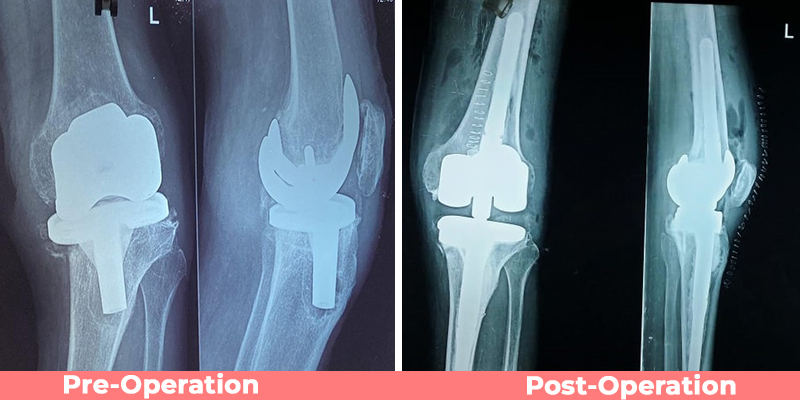
Revision knee surgery is not simply a knee replacement performed for the second time.
There is already an artificial joint in place, and something has happened that needs another look. It could be related to changes in the knee after the earlier operation, an injury, or difficulties following a previous procedure. Before anything is decided, the surgeon needs to understand what has happened and what needs to be corrected. That makes revision surgery a little different from starting with a knee that has never been operated on.

A knee replacement is generally considered when pain and loss of function have started making normal activities difficult. Ageing and injury can both affect the stability and function of the knee.
But having had a knee replacement doesn’t mean that every new ache requires another operation. If problems develop later, the first step is to find out what is actually causing them. Sometimes the answer is connected to the previous surgery, while other cases may involve changes in the joint over time.
One of the first questions people have is when knee replacement is necessary, especially after dealing with knee pain for a long time. There isn’t a single point when everyone should have the procedure.
The condition of the knee, the amount of pain and how much normal movement has been affected all matter. A doctor can look at these factors and decide whether surgery or another form of treatment makes more sense. The same careful assessment becomes even more important when someone has already had a replacement.
With a first knee replacement, the damaged part of the natural joint is replaced with an artificial one.
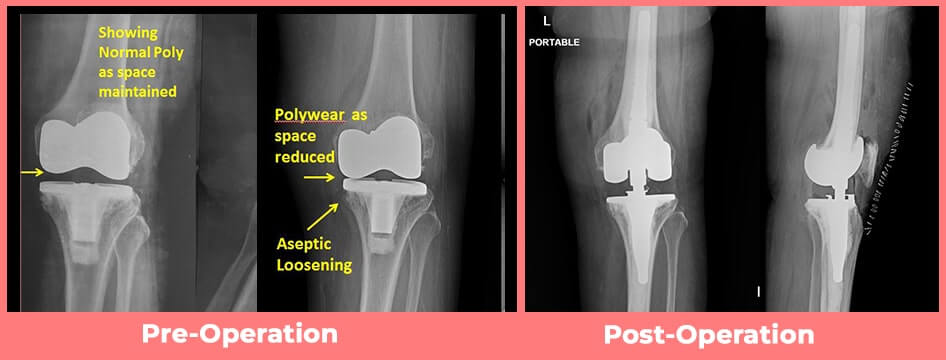
Revision surgery starts from a different place. There is already an implant, and the surgeon has to work out what has happened around it before deciding what needs to be done. Complex degeneration, defects after an accident or injury, and difficulties following an earlier surgical procedure can all make a knee case more complicated. That is why revision knee replacement surgery calls for more than simply repeating the original operation.
The question who needs knee replacement surgery doesn’t have a one-line answer.
Someone with severe knee pain and restricted movement may be considered for replacement, but the surgeon also needs to look at the condition of the joint and the person’s overall health. For someone who already has an artificial knee, the decision is different again because the doctor first needs to understand why the existing knee is causing trouble. In either situation, an assessment comes before deciding on surgery.
A lot of the work happens before the patient enters the operating room.
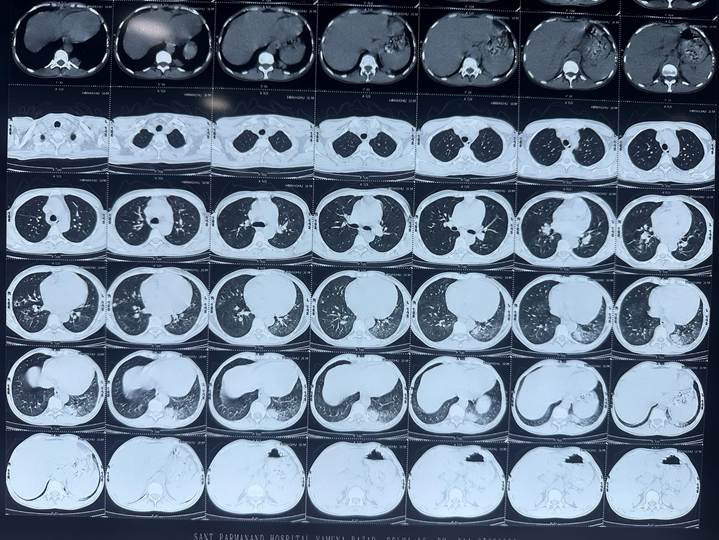
CT scans can be used to create a three-dimensional model of the knee, giving the surgeon a detailed picture to work from when planning the procedure and deciding how the replacement should be positioned. During robotic knee replacement, the system can then help with accurate bone cuts and placement of the artificial joint. The robot helps with the technical side of the procedure, but the surgeon remains in charge throughout.
When a knee has already been operated on, there can be more to consider than there was the first time.
Dr. Shekhar Srivastav has more than 27 years of experience in orthopaedic surgery and has performed more than 18,000 orthopaedic surgeries, including over 2,000 knee replacements and arthroscopic procedures. He has also performed more than 500 robotic knee replacement surgeries. For someone comparing the best hospital for revision knee replacement surgery in Delhi, experience with different kinds of knee problems is therefore something worth looking at.
Modern equipment can be useful, but it isn’t the whole story.
A hospital dealing with complicated knee problems may also need experience across joint replacement, arthroscopy, ACL procedures, trauma and other orthopaedic conditions. That broader experience can be useful when a patient’s situation doesn’t fit neatly into one category. That’s something worth considering when comparing the best hospital for revision knee replacement surgery in Delhi, particularly when the case is more complicated than a routine knee replacement.
A problem with an existing implant can understandably make people anxious.
Someone searching “Where to get a failed knee implant fixed in Delhi” may be tempted to look straight for a revision procedure. But the reason behind the problem needs to be understood first. The surgeon can then explain whether revision surgery is appropriate and what may need to happen with the existing implant.
For someone trying to find the best hospital for revision knee replacement surgery in Delhi, understanding the cause of the implant problem should come before deciding on the procedure.
Robotic assistance can also be used in knee replacement, including complex knee cases and situations involving previous surgical difficulties.
Sant Parmanand Hospital uses CUVIS, described as the world’s first fully active robot with an infrared camera, for knee replacement procedures. The system supports the planning process and helps with precise bone cuts and implant positioning, while the surgeon remains in charge throughout.
Having trouble with a knee replacement can be frustrating, especially when you thought that chapter was already behind you. But a difficult knee does not automatically mean there is no way forward.
The useful place to begin is with a proper assessment. Once the reason for the problem is clearer, the surgeon can talk through what options are available and whether another operation is actually needed.
At Sant Parmanand Hospital, we handle knee replacement, arthroscopic procedures and complex orthopaedic cases, with robotic technology also available for knee replacement surgery. For anyone looking for the best hospital for revision knee replacement surgery in Delhi, it is worth considering the experience of the orthopaedic team, the technology available and the wider care surrounding the operation.
A case can be more complicated when there is an existing implant, significant joint damage, changes after an earlier surgery, or problems following an injury.
CT based 3D images can help the doctors learn about the knee before surgery and robotic technology can help with planning and precise steps of the procedure.
That depends on what is happening with the existing knee. The surgeon will first assess the joint and then choose an implant suited to what needs to be replaced or corrected.
There isn’t a set number of days. It depends on the surgery and how the patient is doing afterwards.
Revision surgery usually needs more care than a routine knee replacement. Your surgeon will let you know whether going home the same day is realistic for your case.